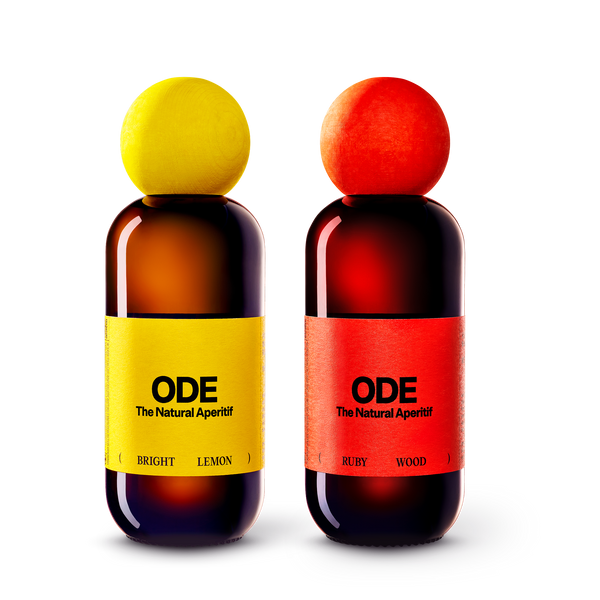
An aperitif made from wine.
Not from sugar.

Most aperitifs are made of water, alcohol, sugar and colouring. ODE does it differently: the base is Riesling.

An aperitif made from wine. Not from sugar.

What's in it

  • Riesling instead of water. The wine brings its own aromas. Developed with Rheinhessen winemaker Nico Espenschied.
  • Roots, barks and peels instead of artificial flavours and synthetic bitter compounds.
  • No artificial colours. That's why ODE comes in dark glass.
  • Sweetness: most of it comes from the residual sugar of the wine, topped up with German beet sugar.
  • Sulphites are listed on the label. They come from the wine.

The two varieties

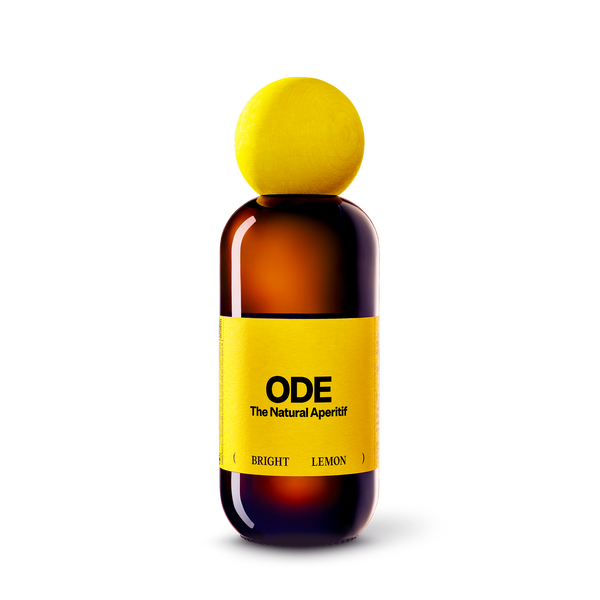
Bright Lemon: seven varieties of lemon, peach, a hint of herbs.
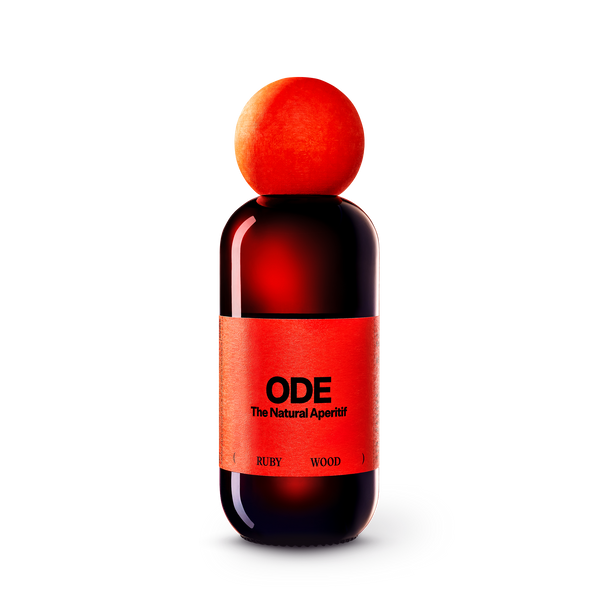
Ruby Wood: bitter orange, wood, noticeable tannins.

The bottle

Dark glass, solid wooden ball, label on cotton paper. The ball stands for the sun kissing the horizon: the hour of the aperitif.
How to drink ODE · Twin Bundle + Box – €50

Goes with this

Questions and answers.

More answers in our FAQ.

Is ODE a vermouth?

No. ODE contains no wormwood and no pomace brandy. The base is always the freshest possible Riesling from Rheinhessen, which makes ODE fresher and livelier than vermouth.

  • Alcohol: 18.5% ABV from Riesling and neutral alcohol, around 6% ABV in the glass with tonic.
  • Sugar: up to 60% less than well-known aperitifs.
  • Flavour: no artificial flavours, no artificial colours.

Two varieties: Bright Lemon and Ruby Wood.

Is Aperol a vermouth?

No. Aperol is an Italian bitter aperitif made from alcohol, sugar and botanicals such as bitter orange and rhubarb. Vermouth, on the other hand, is an aromatised wine with wormwood.

ODE sits in between: wine-based like vermouth, but without wormwood, and with up to 60% less sugar than well-known aperitifs. If you like Aperol Spritz, try Ruby Wood with bitter orange, hibiscus and gentian.

What makes a good vermouth?

A good vermouth has a good wine base, real herbs and balanced sweetness. It comes in red (rosso), white (bianco) and dry. Drink it neat on ice, with tonic or in classics like the Negroni and Martini.

If you like vermouth on ice with tonic, try ODE: also wine-based, but with fresh Riesling and no wormwood, which makes it fresher and livelier.

What is vermouth called in German?

Wermut. Vermouth is the French and English form, derived from the German word Wermut, the name of the plant wormwood (Artemisia absinthium) that gives the drink its name.

By the way: ODE is not a vermouth but an aperitif made with fresh Riesling, without wormwood, with up to 60% less sugar than well-known aperitifs.

Which drinks contain vermouth?

  • Negroni: gin, red vermouth, bitter.
  • Americano: red vermouth, bitter, soda.
  • Martini: gin with dry vermouth.
  • Manhattan: whiskey with red vermouth.
  • Vermouth & tonic: vermouth on ice with tonic.

For a lighter drink on the same principle: ice, 2 parts tonic, 1 part ODE. Around 6% ABV in the glass.

What is a modern vermouth?

Modern vermouth makers focus on regional wines, their own botanicals and less sweetness. Alongside the classics from Italy and France, there are now producers in Germany and Austria too.

ODE goes one step further: not a vermouth, but an aperitif made with fresh Riesling, with natural bitterness from roots and barks, no artificial flavours, no artificial colours.